The Case for Global Bonds, 2nd Edition
Constructing sustainable and risk-adjusted portfolios in a global context.
Globally reverberating shocks this past year demonstrate the wisdom of Greek philosopher Heraclitus who said that “the only constant in life is change.”
These words offer perspective at a time when volatility and change have affected almost everyone on the planet. Global financial markets are no exception as their shifting dynamics are influenced by demographic and economic trends, a changing climate, and the disruption caused by the COVID-19 pandemic. For investors, navigating these transformations and ascertaining the associated opportunities and risks can be challenging. Digging into the data, we find that investing in sustainable bonds, globally and across currencies, can offer an advantageous risk-adjusted return profile.
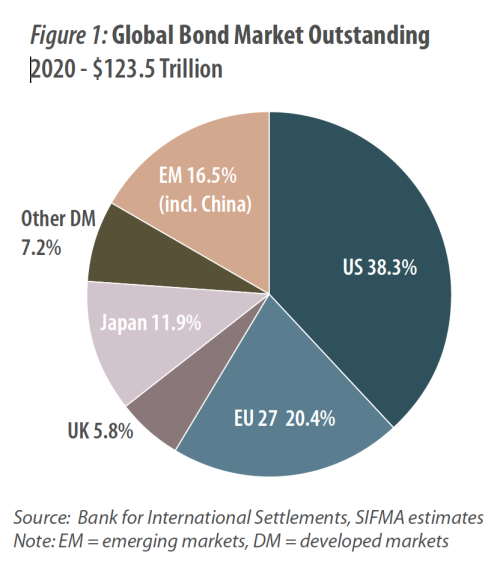
Current market trends point to emerging economies experiencing a higher rate of economic growth and a greater presence in the global markets, which ultimately means a larger contributing role in investors’ portfolios. Although most of the world’s population lives in emerging market countries, securities from these countries comprise only 16.5% of the global bond market.
Several of these economies may overtake developed economies in size over the next 30 years. As investors, the flexibility to invest in these regions will be key to value creation in bond portfolios. Global bond strategies provide this flexibility and can typically diversify investments across currencies. This diversification ability offers a compelling advantage over constrained strategies such as international funds, which invest only in non-US securities. A portfolio strategy that allocates among emerging market bonds or foreign currencies carries some risk, but a global bond allocation can offer compelling risk-adjusted returns that can be an excellent addition to overall asset allocation.
When combined with environmental, social, and governance (ESG) integration, a global bond strategy can be on the cutting edge of sustainable finance by investing in companies and sovereign nations that embrace increasingly better policies and provide unique opportunities for positive impact. With the whole world to choose from, the discussion of global debt cannot be separated from the discussion of sustainability — climate-related risks, water, and carbon emissions are all factors to consider. We look at where the markets are going — which asset classes, including bonds, equities, and currencies, show the best risk-adjusted returns — and then use ESG integration to find the best names within those markets. This strategy also affords investors the opportunity to put money to work where sustainable policies and debt can be particularly impactful.
Global-Fixed Income Landscape
According to the Securities Industry and Financial Markets Association (SIFMA), as of December 31, 2020, the global bond market was worth a staggering $123.5 trillion dollars and experienced year-over-year growth of 16.5%, well above its three-year compound annual growth rate (CAGR) of 7.8%.1 This increased growth rate can be attributed to countries around the world issuing debt to fund massive government-sponsored fiscal programs as a means of stabilizing their economies during the pandemic.
The outstanding stock of global debt is valued at $123.5 trillion, and 38.2% of that debt is sourced from the United States. This makes the US the largest bond market in the world, valued at $47.2 trillion. The EU is the second largest bond market, representing 20.4% of global debt, otherwise $25.2 trillion.2 It is interesting to note that the EU with a population of 748.3 million, double that of the US, has a bond market that is almost half the size of the US market.
Investment prudence and wisdom tends to suggest that diversification is an important element in achieving long-term goals. While the US bond market is sizeable, an investment strategy focused only on US debt would ignore more than 60% of all bonds. Such an isolated approach limits investors’ options by reducing diversification opportunities that could help them achieve their long-term investment goals. Our objective in this paper is to help investors gain a better understanding of the global landscape and its risk and return characteristics.
A breakdown of the global fixed-income market is presented in Figure 1: Global Bond Market Outstanding. What stands out, from an investor’s perspective, is that emerging markets comprise only 16.5% of the total. This garners our interest for three reasons. First, more than 85% of the world’s population lives outside of North America and the EU.3 The US only represents 4.3% of the world’s population, and yet it has the largest share of debt outstanding.4 Second, a significant portion of global economic activity is taking place outside of the US and the EU. This activity is projected to represent the largest share of global gross domestic product (GDP) in the next few years. Third, emerging markets are often overlooked when creating a diversified fixed-income portfolio. As a result of their growing share of global economic activity, expanding populations, improvements in standard of living, and rising presence in the world’s debt markets, emerging markets should warrant investors’ attention.
A Quiet Tectonic Shift
The movement of geographic debt distribution demonstrates that the shift toward emerging markets has already begun. Figure 2: Distribution of Outstanding Global Debt shows that while the US has retained a dominant presence since 2006, averaging 38.8% of the world’s outstanding debt, the EU’s share has declined to 20.4%, down from its apex of 30.7% in 2009. In contrast, the debt issued by emerging markets has been steadily increasing; in 2006, emerging markets had issued 3.2% of the world’s outstanding debt, but by 2020, its share had grown to 16.5%, experiencing a five-year CAGR of 15.3%.
Rising economic activity explains, in part, the growth in emerging market debt. Figure 3: Regional GDP as a Percentage of Global GDP shows the regional share of global GDP over time. The share of GDP has shifted away from developed regions, such as the US and the EU, to emerging economies such as Asia. In 1970, the US and the EU’s global share of GDP was 35.9% and 24.3%, respectively. By year-end 2020, these shares had fallen to 24.7% and 18.1%, respectively. The US’s share of GDP declined 11.2% and the EU’s declined 6.2%. For the same 50-year period, China and East Asia & the Pacific both saw growth in their share of global GDP from 3.1% and 13.7% in 1970 to 17.4% and 32.0% in 2020, respectively.
In 2017, international accounting and consulting firm PwC published a study outlining how the global economy may look in the future. They incorporated population growth patterns, historical and forecasted GDP trends, government investment rates, developments in education, and socioeconomic patterns. While there is plenty of room for debate on what the future outcome will be, emerging market economies can be expected to move up the ranks relating to their share of global GDP. In their study, PwC used GDP Purchasing Power Parity (PPP) to compare country rankings. GDP comparisons using PPP are arguably more useful when assessing a nation’s domestic market, because PPP takes the relative cost of local goods, services, and inflation rates of the country into account, rather than using international market exchange rates, which may distort the real difference in per capita income.5
“It’s tough to make predictions, especially about the future,” said Yogi Berra. With this quip in mind, we refer to the data with a balanced view. The rankings in Figure 4: Emerging Markets Will Dominate the World's Top 10 Economies in 2050 (GDP at PPPs) show a material “shakeup” of the top 10 countries by 2050; emerging market economies are expected to overtake developed market economies.6
According to PwC, the world economy will double in size by 2042, growing at an annual average rate of 2.6% from 2016 to 2050. They expect global growth to be driven largely by emerging markets and developing countries, with the economies of Brazil, China, India, Indonesia, Mexico, and Turkey growing at an annual average rate of almost 3.5% over the next 30 years, compared to just 1.6% for Canada, France, Germany, Italy, Japan, the UK, and the US.
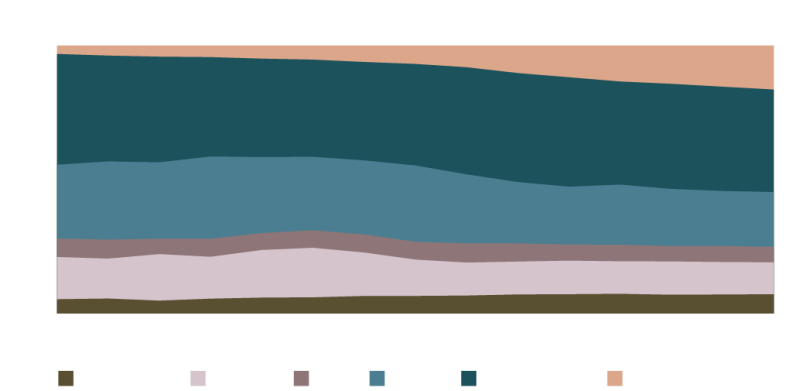
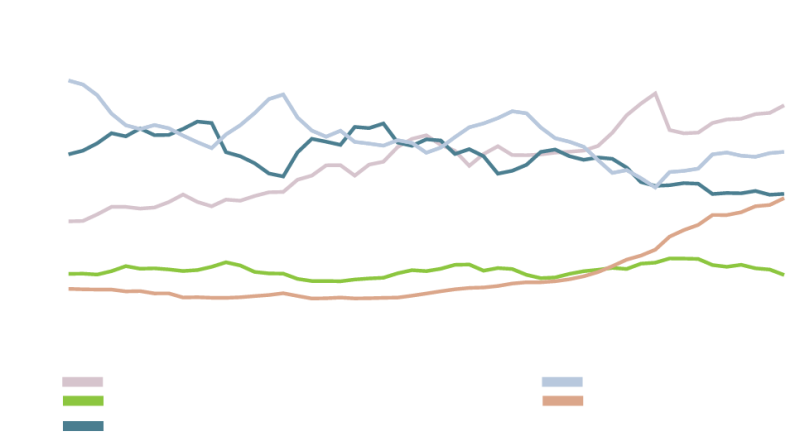
Figure 4: Emerging markets will dominate the world's top 10 economies in 2050 (GDP at PPPs)
| 2016 | 2050 | ||
| China | 1 | 1 | China |
| US | 2 | 2 | India |
| India | 3 | 3 | US |
| Japan | 4 | 4 | Indonesia |
| Germany | 5 | 5 | Brazil |
| Russia | 6 | 6 | Russia |
| Brazil | 7 | 7 | Mexico |
| Indonesia | 8 | 8 | Japan |
| UK | 9 | 9 | Germany |
| France | 10 | 10 | US |
| █ | E7 economies | █ | G7 economies |
Sources: IMF for 2016 estimates, PwC analysis for projections to 2050
Uncovering the Devil in the Details: Assessing Risk-Adjusted Returns
The future shape of the global bond market and GDP projections offer investors incentives to look worldwide for opportunities. However, evaluating the risk and return attributes of a global strategy is an important component of this analysis. The Sharpe ratio provides an especially powerful assessment of risk relative to returns. The ratio measures a security’s return compared to the risk-free rate, adjusted for the security’s per-unit of volatility or total risk. The higher the Sharpe ratio, the more attractive the risk-adjusted return.7
Figure 5: Global Asset Classes: Risk Relative to Returns compares the investment characteristics of emerging market debt and equities with those of the developed world using a basket of 29 different indices. The Sharpe ratios were calculated over a 12-year period, starting when most emerging market benchmark data began being compiled.
If these indices were investible, an investor who focuses only on US debt would be limited to just three of the top 10; meanwhile, a global investor would have access to all of the top 10 indices.
There are important lessons investors can learn in observing these risk-adjusted performance results. First, we can witness a performance “clumping,” a tendency for benchmarks to retain a similar relative ranking throughout the selected time periods. The benchmarks that obtained a risk-adjusted ranking in the top one-third of the group at the beginning of the period tended to retain this top-tier ranking over time, while the bottom one-third tended to retain their poor risk-adjusted results. While there is performance “creep” over the shorter periods where the equity benchmarks demonstrate an improvement of risk-adjusted results, many of the top global bond and sukuk benchmarks still retain their top-tier positions. Second, emerging market bonds originating from the Middle East and China retained among the highest risk-adjusted performance metrics, while local currency Latin American benchmarks demonstrated some of the poorest results.
Among the top performers, emerging market-related fixed-income indices offered the highest risk-adjusted return. Specifically, the FTSE IdealRatings Sukuk Index, a benchmark entirely comprised of Islamic-compliant bond-equivalent securities referred to as sukuk, retained a top-tier performance across multiple time periods. Coming in second is the Bloomberg Barclays GCC USD Credit Total Return Index, including bonds and sukuk that originated from the Gulf Cooperation Council (GCC) region.8 These favorable characteristics can be attributed, in part, to the GCC’s attractive yield spread relative to US-domiciled securities while retaining high credit ratings. US fixed-income indices tended to retain favorable risk-adjusted performance characteristics throughout multiple time periods (in particular the Bloomberg Barclays US Corporate High Yield Total Return and Bloomberg Barclays US Corporate Bond Indices). This further supports the value and importance of exposure to these instruments, even in a low interest rate environment. Fixed-income securities, both US and non-US, can offer important diversification and return attributes for investors in all kinds of economic environments.
Readers can find the annualized return and standard deviation results for each selected period in Appendix I.
Figure 5 demonstrates the need for strong discernment in the global markets. There are a variety of factors that can affect the Sharpe ratio of some emerging market equity and emerging market currency-based indices. These benchmarks typically incorporate a large geographic region and many different economies around the world. Some of the poor performances can be attributed to higher risk premiums, greater sensitivity to foreign investment flows, or substantial differences in liquidity when compared to developed world markets. Additionally, emerging market economies tend to have greater dependence upon global commodity price trends. Examples include the MSCI Emerging Markets Equity Index and the Emerging Markets Currency Index.
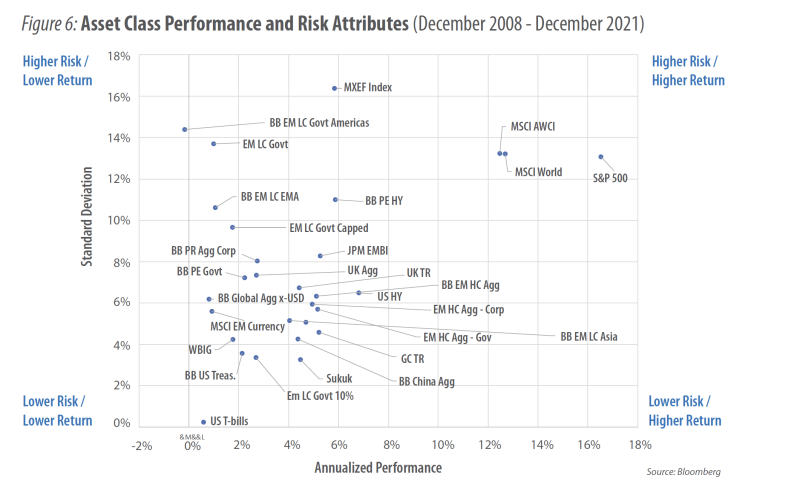
Perhaps the most useful representation of risk versus return can be seen in Figure 6. Return is charted on the horizontal axis, and standard deviation as a measure of risk is represented on the vertical axis. We believe an ideal asset allocation would have a combination of lower risk/lower return assets such as Treasury bills, higher risk/higher return assets such as equities, and lower risk/higher return securities that would be accessible through a global bond strategy. The quadrant to avoid is higher risk/lower return.
An allocation to equities gives an investor access to securities with higher risk for the potential reward of a higher return. Over the trailing 10-year period ended December 31, 2021, the S&P 500 Index experienced the highest annualized return of 16.52% but with relatively high risk, as measured by standard deviation, coming in at 13.07% — ranking sixth among the 29 selected benchmarks. As the saying goes, success with equities can be best defined as “time in the market rather than timing the market.” Equities can experience pronounced volatility but can also offer opportunities for higher returns to those with the patience to withstand the swings in valuations. For example, if indices were investible and an investor missed the five highest performing days of the S&P 500 from 1980 through 2018, their overall return would be reduced by 35%. In fact, missing the 10 highest performing days for that period would cut the investor’s long-term results by more than half.9
One important takeaway, from a global bond perspective, is the difference in risk between emerging market equities and bonds. It’s understandable that risk-averse investors could be wary of these investments when both the MSCI Emerging Markets Equity Index and MSCI All Country World Equity Index had high rates of volatility. However, emerging markets' fixed income offered competitive returns with measurably less risk. The Emerging Markets Hard Currency Aggregate Corporate Index and the JP Morgan Emerging Markets Bond Index were some of the top performers on a risk-adjusted basis, as shown in the Sharpe ratio table (Figure 5). The ability to allocate a bond portfolio in the lower risk/ higher return and lower risk/lower return quadrants, therefore optimizing risk and return globally, can be a tremendous advantage for a global strategy. Emerging market debt can be an excellent way to get exposure to that higher return/lower risk quadrant, which can be used in combination with US bonds for an optimized portfolio.
Figure 5: Global asset classes: risk relative to returns
| Sharpe Ratio | ||||||
| Asset Class | Rank | Asset Class Benchmark | 12-year | 10-year | 5-year | 3-year |
| Global Sukuk | 1 | FTSE IdealRatings Sukuk Index | 1.39 | 1.19 | 1.00 | 1.12 |
| Global Bonds | 2 | Bloomberg Barclays GCC USD Credit Total Return Index | 1.16 | 1.01 | 0.82 | 0.94 |
| Global Bonds | 3 | Bloomberg Barclays China Aggregate Index (CNY Denominated) | 1.11 | 0.89 | 1.04 | 1.19 |
| US Equities | 4 | S&P 500 Index | 1.06 | 1.22 | 1.12 | 1.41 |
| US Bonds | 5 | Bloomberg Barclays US Corporate High Yield | 1.00 | 0.96 | 0.70 | 0.80 |
| US Bonds | 6 | Bloomberg Barclays US Corporate Investment Grade | 0.98 | 0.81 | 0.71 | 0.86 |
| Global Bonds | 7 | Bloomberg Barclays Emerging Markets Hard Currency Aggregate Index | 0.83 | 0.72 | 0.51 | 0.51 |
| Global Bonds | 8 | Bloomberg Barclays Emerging Markets Hard Currency Aggregate: Other Government Related | 0.83 | 0.80 | 0.71 | 0.69 |
| Global Bonds | 9 | Bloomberg Barclays Emerging Markets Local Currency Government 10% Country Capped | 0.81 | 0.62 | 0.60 | 0.46 |
| Global Bonds | 10 | Bloomberg Barclays Emerging Markets Hard Currency Aggregate: Corporate | 0.74 | 0.73 | 0.56 | 0.54 |
| Global Equities | 11 | MSCI World Net Total Return USD Index | 0.73 | 0.92 | 0.92 | 1.17 |
| Global Bonds | 12 | Bloomberg Barclays EM Local Currency Universal Asia Total Return Index | 0.72 | 0.67 | 0.94 | 0.93 |
| Global Equities | 13 | MSCI ACWI Index | 0.72 | 0.90 | 0.93 | 1.14 |
| US Bonds | 14 | Bloomberg Barclays US Treasury Index | 0.70 | 0.43 | 0.51 | 0.58 |
| Global Bonds | 15 | JP Morgan EMBI Global Core | 0.68 | 0.56 | 0.39 | 0.43 |
| Global Bonds | 16 | Bloomberg Barclays Global Credit - United Kingdom TR Index Unhedged USD | 0.52 | 0.57 | 0.56 | 0.60 |
| Global Bonds | 17 | FTSE World Broad Investment-Grade Bond (WBIG) Index USD | 0.40 | 0.28 | 0.52 | 0.43 |
| Global Bonds | 18 | Bloomberg Barclays Global Agg - United Kingdom TR Index Unhedged USD | 0.39 | 0.29 | 0.45 | 0.48 |
| Global Bonds | 19 | Bloomberg Barclays Pan-European High Yield (USD) Total Return Index Unhedged US | 0.34 | 0.48 | 0.41 | 0.34 |
| Global Equities | 20 | MSCI Emerging Markets Index | 0.24 | 0.32 | 0.55 | 0.53 |
| Global Bonds | 21 | Bloomberg Barclays EM Local Currency Government 10% Country Capped | 0.20 | 0.12 | 0.27 | 0.13 |
| Global Bonds | 22 | Bloomberg Barclays Pan-European Aggregate Corporate TR Index Unhedged USD | 0.19 | 0.27 | 0.32 | 0.20 |
| Global Bonds | 23 | Bloomberg Barclays Pan-European Government Total Return Index Unhedged USD | 0.16 | 0.23 | 0.33 | 0.17 |
| Global Bonds | 24 | Bloomberg Barclays Global Aggregate ex USD Index | 0.14 | 0.04 | 0.35 | 0.16 |
| Global Bonds | 25 | Bloomberg Barclays Emerging Markets Latin America Local Currency Govt Country Capped Gross | 0.12 | 0.03 | 0.12 | -0.11 |
| Global Bonds | 26 | MSCI Emerging Markets Currency Index | 0.11 | 0.06 | 0.36 | 0.18 |
| Global Bonds | 27 | Bloomberg Barclays Emerging Markets Local Currency Government Index: Americas | 0.05 | -0.05 | -0.01 | -0.21 |
| Global Bonds | 28 | Bloomberg Barclays EM Local Curr Europe/Mideast/Africa Total Return Index | 0.04 | 0.04 | 0.20 | 0.16 |
| US Bonds | 29 | Bloomberg Barclays US Treasury Bills 1-3 Months | 0.00 | 0.00 | 0.00 | 0.00 |
Source: Bloomberg
In this second edition, we have provided a matrix of 29 benchmarks, identifying their respective annualized performance and risk as measured by standard deviation over the trailing 10-year period ended December 31, 2021. This differs from the first edition, which captured the same information but over a 12-year period (2009-2020). When we compared this 10-year matrix to the prior edition, we noticed that equity benchmarks have experienced higher returns while fixed-income benchmarks have experienced more muted results. The higher equity performance can be attributed, in part, to the robust investment performance over the last two years due to the extraordinary global accommodative monetary and fiscal policies in response to the pandemic.
Investment benchmarks tend to revert to the mean; that is, there is a tendency for assets to converge to their respective long-term historical averages. However, there have been times when benchmarks experienced extraordinary returns. One such example includes the strong equity performance during the late 1990s that led to the dot-com bubble. In short, assets can experience favorable periods as well as challenging tenures.
Among this matrix of benchmarks, the FTSE IdealRatings Sukuk Index and Bloomberg Barclays US Treasury Bills 1-3 Months Index were the only two asset categories that realized a positive annual return between 2011 and 2021. The FTSE Sukuk’s worst performance was 0.26% in 2018, while the US Treasury Bills Index’s worst was a return of 0.03% in 2015. While their unique track records do not make any guarantees about future returns, they do demonstrate the unique investment characteristics of sukuk securities.
ESG Landscape in a Global Context
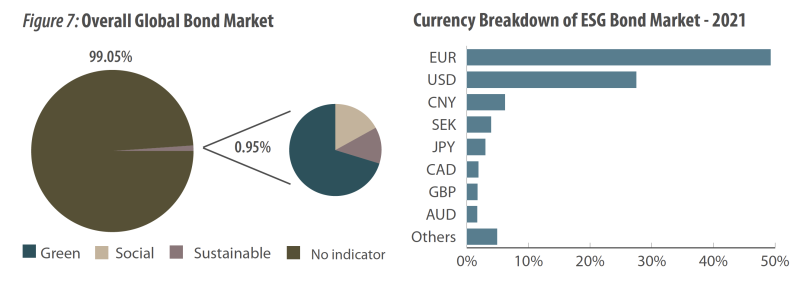
ESG integration is a critical component of a global strategy, and the conversation around the case for global bonds must include consideration of sustainability. This is especially true when choosing the best risk-adjusted returns from around the globe. Referring to Figure 6, we believe that ESG integration is critical to avoid the upper left quadrant of higher risk/lower return. This also enables an investor to focus on risk reduction in areas such as climate and governance while also taking advantage of opportunities in growing markets. A strong internal process for ESG integration is of paramount importance given the data challenges, changing markets, and lack of uniform standards governing what can be defined as “green” bonds, sometimes referred to as qualified proceeds-use bonds. Currently, only about 1% of total debt outstanding is specifically labeled as having a qualified proceeds-use. (Defined in Figure 7 as Green, Social, or Sustainable.)
Figure 7: Overall Global Bond Market details the qualified proceeds-use and currency breakdowns of the current bond market. Even within the small category of the sustainable bond market, US dollar-denominated bonds account for only 27.5% of total debt outstanding. If an investor is seeking bonds with sustainable use of proceeds, a global strategy would have access to a much larger pool of debt securities. Issuance in the space is growing rapidly, with both 2019 and 2020 seeing growth of more than 60%. Europe and the US account for most issuance, but we expect that green, social, and sustainable bonds will track the overall global bond market with emerging market economies issuing more debt with specific use of proceeds.
In the meantime, a sustainability-minded investor must look outside of the labeled sustainable bond market for investment opportunities, not only due to the relatively small size of the market, but also for the lack of consistency in standards for what constitutes a qualified proceeds-use bond. Even issuers of green bonds can have serious governance or social detractors that could ultimately impact their underlying creditworthiness and subsequent returns.
Evaluating ESG Opportunities: Gender in a Global Landscape
ESG standards vary across the globe. Gender equality and gender-related disclosure have a foothold in nations such as the UK, where companies are required to disclose gender pay gaps. In the US, more companies are adding women to boards and acknowledging the research showing a positive link between gender representation and improved profitability.10 However, in many other parts of the world, this change is just starting and needs investment with specific gender equality goals in mind. In Cambodia, the literacy rate for women is only 75%, while the literacy rate for their male counterparts is more than 10% higher.11 The US and other developed nations have literacy rates around 99% for both genders.12 The opportunity for economic growth, better corporate governance, and improved climate for business likely will flourish alongside improvements in gender equality and equality in education.
Organizations such as Impact Investment Exchange Asia (IIX), a Singapore-based organization focused on the empowerment of women, the environment, and underserved communities, can provide an ESG investor with fixed-income impact opportunities and portfolio diversification benefits. These cutting-edge bonds offer institutional investors the ability to invest in securities that fund loans for woman-owned enterprises and micro-finance organizations in Cambodia, India, the Philippines, and Indonesia. These bonds offer diversification across geographies, beneficiaries, and organizations, as well as a partial credit guarantee from the US Agency of International Development. While many of these bonds face "junk bond" ratings, the opportunities they present can allow a global investor risk mitigation, impactful investment, and participation in furthering gender equality.
The GCC – Overlooked Opportunities in ESG
It is fair to assume that the growth of emerging market debt may not be on the radar for most investors. However, capital market growth, along with diversification opportunities, are available outside of the developed markets. Over the past decade, these debt markets have gained in size, depth, and liquidity. In fact, debt markets of regions such as the Middle East rival the size of some segments of the developed markets. By August 12, 2019, the size of Europe's high-yield market was estimated at €432 billion (~$485 billion).13 At the same time, the size of the GCC fixed-income market was $506 billion, with 12 US dollar-denominated securities representing 87% ($365 billion) of the total outstanding securities.14
The GCC region's attractiveness to institutional investors has played a part in facilitating growth in the region's debt market. Many of the GCC members retain credit ratings that are more commonly found in developed countries. The United Arab Emirates has an “AA” rating from S&P, on par with the US and the UK. Saudi Arabia is rated “A-,” only two notches away from China’s “A+.” 15 Relatively strong credit characteristics contribute to 14 of the appealing risk-adjusted return profiles discussed earlier. The favorable investment attributes have not gone unnoticed by global benchmark providers, such as JP Morgan. At year-end 2021, the GCC region represented 22.4% of the Emerging Market Bond Global Index and 18.1% of the Emerging Markets Bond Global Diversified Index, up from 2.1% and 6.2% at year-end 2018, respectively.16
Within this region there are compelling ESG opportunities relating to the environment and the transition toward a low-carbon economy. The region is known for its extremely hot summers, where temperatures can rise above 120° F (49° C)! Demand for air conditioning during the summer accounts for up to 70% of the overall electricity consumption in the UAE.17 The National Central Cooling Company PJSC, often referred to as Tabreed, offers a unique solution to reduce carbon emissions and energy demand. Tabreed builds and operates utility-sized central plants to cool water, which is then distributed through a dedicated network of insulated pipes to customers’ buildings, known as a cooling district. The company has a 30-year operating history and currently runs 86 cooling plants in five countries.18 As of year-end 2020, management reported a reduction in CO2 emissions by 1.35 million tons, which is equivalent to removing 293,192 passenger vehicles off the road for an entire year.19
Conclusion
An allocation to global bonds offers investors an important opportunity for portfolio diversification and risk-adjusted returns. With 60% of the bond market located outside the US, the opportunities available to investors are greatly amplified in a global strategy. From a sustainability viewpoint, a global strategy also offers opportunities for impact in developing nations and unique ESG names. Positioning assets for the future of economic growth, while focusing on optimizing risk relative to return, is a hallmark of a global sustainable bond strategy.
Appendix I
| Annual Benchmark Ranking | Performance Annualized by Interval | Standard Deviation | |||||||||||
| Rank | Asset Class Benchmark | Minimum | Maximum | 12-year | 10-year | 5-year | 3-year | 12-year | 10-year | 5-year | 3-year | ||
| 1 | MSCI Emerging Markets Index | -18.20% | 78.92% | 4.64% | 5.84% | 10.23% | 11.28% | 17.57% | 16.38% | 16.61% | 18.55% | ||
| 2 | Bloomberg Barclays EM Hard Currency Aggregate: Corporate | -3.15% | 56.03% | 5.32% | 4.95% | 4.63% | 5.68% | 6.54% | 5.95% | 6.27% | 7.77% | ||
| 3 | Bloomberg Barclays EM Local Currency Government 10% Country Capped | -11.72% | 18.19% | 2.51% | 1.75% | 3.48% | 2.73% | 10.06% | 9.66% | 8.61% | 9.35% | ||
| 4 | Bloomberg Barclays EM Hard Currency Aggregate: Other Government Related | -2.08% | 49.74% | 5.75% | 5.17% | 5.07% | 6.22% | 6.32% | 5.70% | 5.54% | 6.83% | ||
| 5 | Bloomberg Barclays EM Local Currency Government 10% Country Capped | -4.55% | 9.21% | 3.12% | 2.69% | 2.99% | 3.21% | 3.23% | 3.36% | 3.07% | 3.65% | ||
| 6 | MSCI Emerging Markets Currency Index | -7.06% | 13.90% | 1.20% | 0.93% | 2.85% | 2.41% | 6.23% | 5.61% | 4.84% | 4.90% | ||
| 7 | Bloomberg Barclays US Treasury Index | -3.57% | 9.84% | 3.06% | 2.13% | 3.07% | 4.07% | 3.65% | 3.56% | 3.81% | 4.38% | ||
| 8 | Bloomberg Barclays US Treasury Bills 1-3 Months | 0.03% | 2.21% | 0.50% | 0.58% | 1.08% | 0.93% | 0.22% | 0.24% | 0.26% | 0.30% | ||
| 9 | Bloomberg Barclays US Corporate Investment Grade | -2.49% | 18.68% | 5.33% | 4.69% | 5.25% | 7.59% | 4.93% | 5.06% | 5.76% | 7.03% | ||
| 10 | Bloomberg Barclays US Corporate High Yield | -4.47% | 58.21% | 7.33% | 6.82% | 6.29% | 8.83% | 6.81% | 6.48% | 7.37% | 9.13% | ||
| 11 | MSCI World Net Total Return USD Index | -8.67% | 29.99% | 10.97% | 12.68% | 15.01% | 21.68% | 14.25% | 13.21% | 15.01% | 17.30% | ||
| 12 | S&P 500 Index | -4.37% | 32.37% | 15.13% | 16.52% | 18.44% | 26.03% | 13.84% | 13.07% | 15.39% | 17.42% | ||
| 13 | MSCI ACWI Index | -8.87% | 35.48% | 10.78% | 12.46% | 14.98% | 20.98% | 14.35% | 13.23% | 14.88% | 17.13% | ||
| 14 | JP Morgan EMBI Global Core | -6.45% | 28.78% | 6.05% | 5.26% | 4.72% | 6.34% | 8.10% | 8.27% | 9.27% | 11.30% | ||
| 15 | Bloomberg Barclays EM Local Currency Universal Asia Total Return Index | -3.08% | 9.50% | 4.36% | 4.04% | 5.31% | 5.57% | 5.37% | 5.15% | 4.46% | 4.33% | ||
| 16 | Bloomberg Barclays Emerging Markets Local Currency Government Index: Americas | -22.24% | 36.48% | 1.16% | -0.17% | 0.96% | -1.60% | 14.31% | 14.39% | 13.98% | 15.18% | ||
| 17 | Bloomberg Barclays EM Local Currency Europe/Mideast/Africa Total Return Index | -9.03% | 19.74% | 1.02% | 1.06% | 3.19% | 3.21% | 11.42% | 10.61% | 10.20% | 10.51% | ||
| 18 | Bloomberg Barclays GCC USD Credit Total Return Index | -0.43% | 33.54% | 5.79% | 5.21% | 5.62% | 7.87% | 4.54% | 4.58% | 5.47% | 6.74% | ||
| 19 | FTSE IdealRatings Sukuk Index | 0.26% | 27.13% | 4.97% | 4.48% | 4.96% | 6.80% | 3.20% | 3.27% | 3.85% | 4.71% | ||
| 20 | Bloomberg Barclays Emerging Markets Hard Currency Aggregate Index | -4.12% | 34.23% | 5.90% | 5.12% | 4.56% | 5.81% | 6.46% | 6.32% | 6.78% | 8.33% | ||
| 21 | Bloomberg Barclays Global Aggregate ex USD Index | -7.16% | 10.55% | 1.44% | 0.81% | 3.06% | 2.45% | 6.75% | 6.18% | 5.54% | 5.80% | ||
| 22 | Bloomberg Barclays China Aggregate Index (CNY Denominated) | -5.17% | 9.74% | 4.93% | 4.37% | 6.22% | 7.14% | 3.97% | 4.25% | 4.92% | 4.74% | ||
| 23 | Bloomberg Barclays Pan European Aggregate Corporate TR Index Unhedged USD | -9.10% | 21.08% | 2.24% | 2.74% | 3.69% | 3.31% | 9.31% | 8.03% | 7.98% | 8.92% | ||
| 24 | Bloomberg Barclays Pan-European Government Total Return Index Unhedged USD | -9.75% | 13.69% | 1.82% | 2.23% | 3.35% | 2.71% | 8.22% | 7.23% | 6.80% | 7.03% | ||
| 25 | Bloomberg Barclays Pan-European High Yield (USD) Total Return Index Unhedged US | -8.18% | 92.67% | 5.09% | 5.87% | 5.62% | 5.80% | 13.38% | 10.99% | 10.98% | 12.68% | ||
| 26 | Bloomberg Barclays Global Agg - United Kingdom TR Index Unhedged USD | -5.45% | 14.01% | 3.53% | 2.71% | 4.51% | 5.64% | 7.76% | 7.34% | 7.57% | 8.56% | ||
| 27 | Bloomberg Barclays Global Credit - United Kingdom TR Index Unhedged USD | -5.59% | 24.95% | 4.40% | 4.43% | 5.10% | 6.49% | 7.54% | 6.72% | 7.08% | 8.32% | ||
| 28 | Bloomberg Barclays EM Latin America Local Currency Govt Country Capped Gross | -20.50% | 35.00% | 2.16% | 0.99% | 2.70% | -0.04% | 13.63% | 13.69% | 13.26% | 14.42% | ||
| 29 | FTSE World Broad Investment-Grade Bond (WBIG) Index USD | -5.42% | 9.45% | 2.29% | 1.76% | 3.24% | 3.43% | 4.50% | 4.24% | 4.05% | 4.45% | ||
Source: Bloomberg


Footnotes
1 Kolchin, Katie, Ali Mostafa, and Justyn Podziemska. Capital Markets Fact Book, 2020. SIFMA. September 29, 2020. https://www.sifma. org/resources/research/fact-book/
2 Ibid.
3 Al Gergawi, Mishaal, and Afshin Molavi. The 85 World. Emerge85, October 3, 2016. https://emerge85.io/Insights/the-85-world/
4 United States Population. Worldometers. https://www.worldometers.info/world-population/us-population/
5 Applications and Limitations of ICD Data. African Development Bank Group. http://www.afdb.org/fileadmin/uploads/afdb/ Documents/Publications/4-Applications%20and%20Limitations%20of%20ICP%20Data.pdf
6 The World in 2050. Price Waterhouse, February 2017. https://www.pwc.com/gx/en/research-insights/economy/the-worldin- 2050.html#downloads
7 Fernando, Jason. Sharpe Ratio. Investopedia. April 10, 2021. https://www.investopedia.com/terms/s/sharperatio.asp
8 The six members that form the Gulf Cooperative Council (GCC) include Bahrain, Kuwait, Oman, Qatar, Saudi Arabia, and the United Arab Emirates (UAE).
9 Houseman, Drew. Why Mistiming the Market Can Be Disastrous. The Simple Dollar, September 1, 2020. https://www. thesimpledollar.com/investing/stocks/tempted-to-sell-missing-just-a-handful-of-the-best-stock-market-days-can-tank-yourreturns/? platform=hootsuite#:~:text=Advocates%20of%20buy%2Dand%2Dhold,high%2C%20sell%2Dlow%20behavior.
10 Dixon-Fyle, Sundiatu, Vivian Hunt, Sara Prince, and Lareina Yee. Delivering Through Diversity, January 18, 2018. https://www. mckinsey.com/business-functions/organization/our-insights/delivering-through-diversity
11 Cambodia. UN: Women. https://data.unwomen.org/country/cambodia
12 UNESCO Institute for Statistics. Literacy rate, adult female (% of females age 15 and above). The World Bank, September 2020. https://data.worldbank.org/indicator/SE.ADT.LITR.FE.ZS
13 Jessop, Simon, and Abhinav Ramnarayan. Demand for junk bonds grows, and so do liquidity worries. Reuters, August 12, 2019. https://cn.reuters.com/article/instant-article/idUKKCN1V217C
14 Bloomberg.
15 Credit Ratings. Trading Economics. https://tradingeconomics.com/country-list/rating
16 Sahu, Rakesh, and Bhogaita, Chavan. First Abu Dhabi Bank, GCC Fixed Income Chart Book, FY 2021 Review, January 5, 2022. https://www.bankfab.com/-/media/fabgroup/home/cib/market-insights/gcc-fixed-income-market-updated/gcc-fixed-incomepdf/ 20220105gccficb.pdf
17 Pamuk, Humeyra. UAE’s mission impossible: Cooling the desert. Reuters. July 13, 2011. https://www.reuters.com/article/uspower- emirates/uaes-mission-impossible-cooling-the-desert-idUSTRE76C1OI20110713
18 About Us: Our Story. Tabreed. https://www.tabreed.ae/about-us/
19 Tabreed eliminates over 1.35 million metric tons of CO2 emissions in 2020. Tabreed, March 17, 2021. https://www.tabreed.ae/ news/tabreed-eliminates-1-35-million-metric-tons-co2-emissions-2020/