Rising Yields, Emerging Opportunities
Key Takeaways
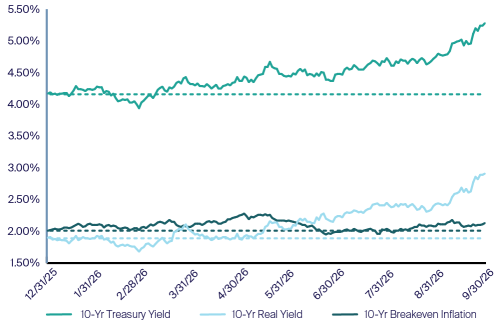
- Renewed Middle East conflict, persistent inflation, and stronger growth pushed the 10-year Treasury yield above 5%, pressuring bond prices.
- With inflation still above target and economic activity resilient, the Fed resumed rate hikes and signaled a continued focus on price stability.
- Elevated real yields may be nearing a peak, creating selective opportunities in high-quality, intermediate-duration credit — while higher-for-longer inflation remains the key risk.
A False Calm
As we transitioned from spring to summer, a sense of calm veiled the markets. In mid-June, the US and Iran signed a Memorandum of Understanding, easing concerns surrounding conflict escalation and potential ramifications. Equities were on solid ground after a strong rebound in May, while US Treasury yields moved lower from their May peak, setting the stage for a tamer quarter in the markets.
Less than a week into the quarter, the Middle East conflict flared up once again: renewed fighting pushed oil prices and inflation expectations higher, and bond yields rose in response. The US 10-year Treasury yield climbed from 4.5% in early July to well above 5% by late September, its highest level since 2007. Because bond prices fall when yields rise, the move translated into mark-to-market losses for existing bondholders. Alongside the geopolitical turmoil, growing fiscal deficits and heavy borrowing by companies to fund AI investment expanded the supply of bonds, while concerns regarding Federal Reserve credibility, particularly related to its ability to control inflation, amplified the selling. This led some analysts to infer that bond vigilantes — investors who sell government bonds to protest excessive government borrowing — are fighting back. Although all these factors contributed to the drawdown, a more optimistic perspective remains: US economic growth accelerated over the summer, and inflation is above target and likely to remain elevated in the short term, both of which naturally push interest rates higher. In our view, this is less of a refusal to purchase bonds at prevailing prices than a repricing to a hotter economy, and the policy response taking shape now suggests we may be getting closer to the end of the selloff than the beginning.
The Accelerating Economy
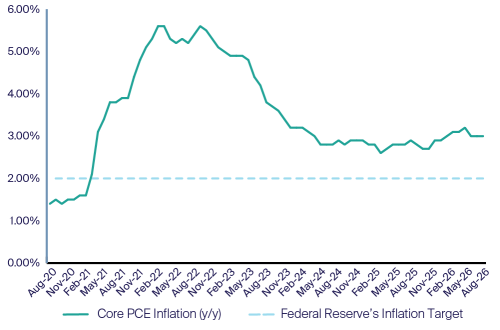
Recent data releases support the fundamental story: progress on inflation stalled, with the Core PCE, the Fed’s preferred inflation measure, registering a 3.0% year-over-year increase. This was the 65th consecutive month that inflation was above the Fed’s 2.0% target, confirming that price pressures would not be easing anytime soon (Chart 1). Adding fuel to the fire, energy prices rose sharply in response to the escalation in the Middle East, dimming the chance of near-term relief. At the same time, a broad range of indicators point to stronger economic expansion. Altogether, GDP growth over the third quarter will likely come in well above the long-run “potential” rate of 2% per year, with underlying private sector demand even stronger. The Atlanta Fed’s GDPNow, a “nowcast” that provides an estimate of real GDP growth, closed the quarter at 3.7%, suggesting that the US economy continues to be in healthy expansion.
Chart 1: Core PCE Inflation Remains Above Target
Core PCE Inflation (y/y)
The Policy Response
The Federal Reserve’s pivot to higher rates unfolded throughout the summer. At the July FOMC meeting, the committee held rates steady, but three members dissented in favor of a hike, marking the most divided decision in a decade. At the September meeting, however, the committee unanimously voted to increase interest rates by 25 basis points (0.25%), with the Fed’s own forecasts pointing to one more hike by year end. Chairman Warsh relayed that committee members were optimistic on the economy, describing a stable labor market, robust credit growth, and non-restrictive financial conditions. He contended that inflation trends have not meaningfully improved, requiring the Fed to refocus on price stability. This action reinforced the Fed’s credibility and reduced fears that Chairman Warsh would succumb to President Trump’s pressure to keep interest rates lower. The reaction was a bearish flattener of the yield curve, where short-term yields rose dramatically and long-term yields were more stable. Unfortunately, the current inflation stems primarily from the closure of the Strait of Hormuz, a supply-side shock that is more difficult to combat than demand-driven shocks. As such, the hike will not immediately ease inflationary pressures to the same degree that ending the war with Iran would.
The Fed is not the only institution responding to rising yields; the Trump Administration is also clearly worried about the sharp increase in financing costs. As the 10-year yield continued to rise, Treasury Secretary Bessent began with verbal warnings and eventually decided to intervene in the USD-JPY currency market to support the yen. By aiding Japan in its intervention, the US reduced the quantity of Treasuries that Japan would need to sell to finance its yen purchases, dampening the selling pressure. The Treasury Department also continued to finance marginal debt issuance in short-term bills rather than across the curve, while substantially expanding Treasury buyback operations; by influencing both Treasury supply and demand, the administration can help stabilize the market, with the overarching goal of reducing borrowing costs. Counterintuitively, the rate hike in September supports these efforts: by demonstrating resolve on inflation, it removed one of the forces that had been pushing yields higher.
Credit Markets
For most of the quarter, corporate credit spreads corroborated the more benign interpretation of the selloff. Despite the sharp rise in yields and heavy corporate issuance, credit spreads — the extra yield corporate bonds pay over Treasuries — were remarkably stable near their multi-decade tights, reflecting sturdy demand rather than capital flight. During the last week of the quarter, bond market volatility rose sharply, and riskier high-yield bond spreads widened nearly 50 basis points as investors demanded more compensation for credit risk (Chart 2). Higher quality investment grade spreads also rose, but the reaction was more muted. The result is a mixed opportunity set: corporate bonds offer attractive all-in yields, but compensation for credit risk remains low, tilting the risk/reward toward higher-quality issuers.
Outlook
Looking ahead, there is an underappreciated probability that yields are approaching their peak. If Treasury yields continue their relentless rise, the Fed and Treasury Department can intervene to restore order, providing short-term reprieve at the expense of future ramifications like financial repression. If the situation becomes increasingly dire, ending the war with Iran is likely the only way to truly defuse the rampant price pressures and geopolitical risks across global markets. In any case, we expect that inflation will remain elevated going forward, and high inflation is the enemy of fixed-income returns. However, real yields are the highest they have been in nearly a quarter century, offering a meaningful return premium above inflation to own high-quality bonds. Notably, market-based inflation expectations remain firmly anchored — the 10-year breakeven sits near 2.3% and long-forward measures imply inflation at or below the Fed’s 2% target (Chart 3). In other words, the entirety of this year’s repricing flowed through real yields rather than inflation expectations, affirming the market’s perception of Fed credibility. We see value in selectively adding duration through high-quality credit while keeping overall duration intermediate, a posture that preserves flexibility and balances portfolio risk. If we are indeed approaching peak real yields, long-term investors have an opportunity to lock in historically attractive real income today, with the potential for price appreciation if yields fall. The key risk is that inflation stays higher for longer, but at least this time around, bondholders finally have some compensation to bear it.
Chart 2: US Corporate Spreads Widened Into Quarter End
United States Corporate Credit Spreads
Investment Grade and High Yield
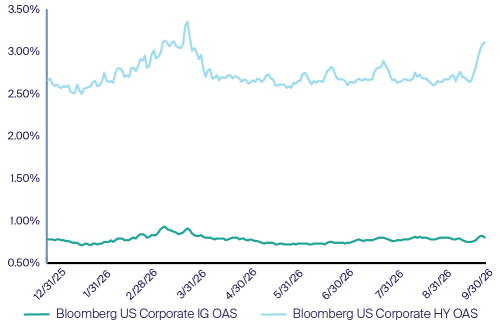
Chart 3: Market-Based Inflation Expectations Remain Anchored as Real Yields Rise
10-Year Treasury Yield: Nominal, Real, and Inflation Breakeven